AFA Alaska + Hawaiian

Representing the Flight Attendants of Alaska + Hawaiian

Click here to report an issue to AFA
Menu
  • Local Councils
    • Anchorage (Council 30)
      • Officers
      • Committees
    • Honolulu (Council 43)
      • Officers
      • Committees
    • Los Angeles (Council 18 pmAS)
      • Officers
      • Committees
      • Los Angeles/Seattle (Council 47 pmHA)
        • Officers
        • Committees
      • Portland (Council 39)
        • Officers
        • Committees
      • San Diego (Council 15)
        • Officers
        • Committees
        • Seattle (Council 19 pmAS)
          • Officers
          • Committees
        • San Francisco (Council 35)
          • Officers
          • Committees

        • More About Local Councils >>
        Close
      • Master Executive Council
        • Officers
        • Close
      • Committees
          • Air Safety, Health, & Security (ASHSC)
            • Air Quality
          • Benefits
          • Communications
          • Employee Assistance Program & Professional Standards
          • Government Affairs
          • Grievance
          • Hotel
          • Human Rights & Equity
          • Inflight Service
          • Inflight Training
          • Membership
          • Membership Engagement
          • Reserve
          • Retirement
          • Scheduling
            • Pairing Construction
            • Preferential Bidding System (PBS)
          • Uniform

        • More About Committees >>
        Close
      • Contract
          • Contract Home
            • 2025 Alaska Contract
            • 2025 Hawaiian Contract Extension
            • Ask Contract Questions
          • Contract Resources
          • Alaska Contract Negotiations (2022-2025)
        • Close
      • Resources
          • What To Do If You Encounter Contaminated Cabin Air
          • Issues & Campaigns
          • Newsroom
            • AFA News Now
          • Event Calendar
          • Membership Services
          • New Members
          • About
          • Links
          Close
        • Merger
          • Joint Negotiating Committee
          • Close
        • Contact Us
        You are here: Home / Archives for pmAS

        Scheduling Committee Meeting Recap – August 2026

        August 31, 2026 17:00

        This message is for pre-merger Alaska Flight Attendants

        On Tuesday, August 25, our pre-merger Alaska AFA Scheduling Committee Chairpersons and Representatives met virtually to discuss their ongoing work to represent our Flight Attendants and push for improvements in our workplace. Representing you at the meeting were Rebekah Olds (ANC), Rita Tillou (SEA), Melodie Anderes (PDX), Jaqui Bellenie (SFO), Kanako Yamado (LAX), and Kitty Cohen (SAN). MEC Scheduling Committee Vice Chairperson—Pairing Construction Karen Ferrell, PBS Committee member —Krystal Kehrli, MEC Grievance Committee Payroll Representative Julie Thornton, and MEC Scheduling Committee Chairperson Jake Jones were also present.

        The Committee met with Managing Director of Inflight Performance & Crew Scheduling Sara Cook, Director of Inflight Crew Scheduling Terrance Chariandy, Manager of Inflight Crew Scheduling Goose Hlaingmyint, Managing Director of Operations Staffing and Resource Management Brittany Audette, Director of Crew Planning Trisha Bennett, Manager of Crew Planning Colin Beard, ITS Technical Product Owner Nathan McFerren, Manager of Crew Pay Debbie Bakke and other management representatives from Crew Planning, Crew Scheduling, information technology (ITS), and payroll.

        The Committee is next scheduled to meet on Tuesday, September 29.

        Topics of Discussion

        The Committee reviewed several topics during internal AFA-only conversations and when meeting with management. Some items discussed include:

        Local Committee Chairperson Reports

        SEA (Seattle)

        • System Monitoring:
          • Monitored Open Time on August 16, 2026.
          • Technical issue identified: Server 1 faced difficulties transferring operations to Server 2.
          • Upcoming discussion on Alternative Dispute Resolution (ADR) scheduled for September 3, 2026.
          • Flight Attendants were encouraged to file tickets with Information Technology Services (ITS).
        • Hotel Compensation:
        • Current wait times at hotels remain an issue. Financial compensation efforts led by a designated AFA representative resulted in successful compensation in several cases.
          • Active disputes remain regarding compensation for rolling delays and situations where hotel accommodations are denied, particularly after delays of four hours or more.
        • Over Duty Pay:
          • Confusion was reported among Flight Attendants regarding expectations for overduty pay.
          • Clarification provided on waivers and premiums outlined in section 8.T.
          • The Committee’s stance is to never waive contractual rights.
        • Pay Guidelines Update:
          • Request for a comprehensive review and update of the Pay Guidelines due to outdated content.
          • Suggested communication to all Flight Attendants to ensure clarity on pay structures.
        • Transportation Review: Issues regarding transportation times to/from JFK require immediate review. An email has been sent addressing ongoing concerns.
        • Low Bid Options:
          • Bases report on high block hours without sufficient transfers back to the SEA base.
          • Preference expressed for Staffing Adjustment Leaves (SAL) among bases.

        PDX (Portland)

        • Open Tickets:
          • Several tickets remain unresolved concerning discrepancies in compensation. Clarification on differences in ticket handling is being sought. Flight Attendants should use crew access as the system of record, not B2B or other public-facing applications. 
          • Trade Ticket Issue: Another ticket under review pertains to a trade and the correctness of messaging involved when Flight Attendant received an incorrect error on Crew Access. 

        SAN (San Diego)

        • No significant operational or compensation issues are reported currently.

        ANC (Anchorage)

        • Hotel Issues: Complaints regarding a lack of available rooms and extended wait times after redeye flights are forwarded to the hotel committee for review.

        LAX (Los Angeles)

        • Day Room Request: A request made for a day room in PDX on August 7 faced timing issues. Scheduling called the hotel at 16:32, leaving only 1 hour and 56 minutes before the crew needed to report. Compensation was denied as the crew declined due to timing constraints. Since the crew declined the day room, no additional compensation was paid. 
        • Sit Pay Denials: Multiple instances have been reported in which sit pay has been denied. Notably, during maintenance delays, aircraft were towed away, affecting sit pay recognition. Specific case: Flight 1635 on August 10, where aircraft maintenance caused delays.
          • Hotel Capacity Issues: Concerns raised about hotel assignments to locations with insufficient capacity. Pilots were assigned to a hotel with only 24% occupancy, raising questions about decision-making processes regarding crew accommodations.

        SFO (San Francisco)

        • Line Averages & LBO:
          • Current line averages remain steady at 80 tfp (Trip Flight Pay).
          • Ongoing discussions regarding low bids (LBO) and potential reductions in line averages to improve crew satisfaction.

        PBS Subcommittee Update

        • September Bidding Month:
          • The September bidding process was active, with numerous inquiries related to low bids and changes in the bid packet.
          • Low Bids: First month processed since 2020. The process was reviewed to ensure contractual compliance watching bid windows.
          • Normal High Bid windows. Adjustments were made to accommodate reserve percentages and ensure lines were awarded within legal windows.
          • Coverage percentages have shown to be comparable across bases to past years.
        • Bid Protests: Had many valid bid protests due to late CB submissions from Special Projects that should have been on Flight Attendant lines before bids were processed
        • Monthly PBS Meetings: Monthly meeting held on August 6, discussing Skywise/NAVBLUE

        Pairing Construction Update

        • October Solutions:
          • Parameters for minimum connections have been modified to enhance efficiency.
          • Collaborative efforts with crew planning are planned for the following month.

        ITS Update

        • AI Crew Solutions (vendor) Initiatives for vacation bidding:
          • Discussions on implementing user interface for crew management:
          • Next meeting set for fall 2026 to discuss vacation awards and slots.
          • Ongoing testing of user acceptance testing (UAT) processes.
        • Trade Response Times:
          • System has maintained a high response rate for trades:
          • 99.17% of trades responded to in under 10 seconds.
          • A decrease in overall trade volume by 568 compared to July 2026.
        • Webnode Issues:
          • Brief issues with webnode 2 being unreachable have been resolved.
          • Ongoing memory leak issue under investigation, prioritized for resolution with Jeppesen.
        • Upcoming Releases:
          • Release version 10.0.7 scheduled for early September:
          • Focused on core fixes for advertised trip pool depopulation during high activity periods. No ETA, but high priority. 

        Payroll Update

        • Query Volume:
          • Total of 3,703 queries recorded in July:
          • Many queries originated from Flight Attendants submitting questions before trip completion.
          • Discussions about enhancing the user guide to clarify views on pay buckets
        • Training Initiatives: Suggestions for creating video tutorials to help Flight Attendants understand pay structures.

        Crew Planning Update

        • Block Hours Analysis:
          • Anticipated block hours for September: 310,850, with an increase to 316,804 expected in October.
          • Current reserve coverage stands at 20%, with low bids in place.
        • Commutability Review:
          • Analysis indicates SEA, PDX, and ANC are best suited for 3-day trips, while SEA, PDX, and SAN are optimal for 4-day trips.
          • LAX and SFO face the most significant scheduling challenges.
        • IRROP Mitigation for Summer
          • Various adjustments were made to start and end duty times in response to:
          • Air Traffic Control (ATC) requirements.
          • Increased layover times in specific locations to accommodate crew rest.
        • Hawaii Neighbor Island Flying
          • Management anticipates increased hotel costs and the need to review hotel accommodations.
          • Pairings appear to be multi-day trips with short rest periods in HNL during some overnights. 
          • We expect these pairings to be reviewed monthly and the operation of the pairings to change over the next several months. 
          • The Flight Attendant and pilot pairings should remain the same for October 2026 to keep the flight crews together and minimize operational disruption. 

        Crew Scheduling Update

        • Sick Leave Trends:
          • Sick leave rates for July recorded at 12.2%, with August trending higher at 14.2%.
          • Reserve utilization is projected to increase from 11.7% in July to 13.6% in August.
        • Absence Volume:
          • Total absences have increased by approximately 18%:
          • A significant rise in the reserve population is driving this increase.
          • Notable peaks in absence rates were observed during June and July.
        • Premium Pay Cost Analysis:
          • July marked the highest premium spending month recorded:
          • Significant costs attributed to specific demand drivers such as special events (e.g., FIFA) and weather-related disruptions.
          • Awarded premium pay constituted over 84% of the total premium TFP.

        Announcements

        • Upcoming Meetings:
          • A comprehensive schedule of meetings has been established from September 2026 through December 2027, including:
          • Regular updates and specific focus meetings on ADR and pairing selection.
        • JCTE Updates: Future updates on JCTE processes and timelines are anticipated for late Q3 2026.

        MEC Committee Chairperson Report

        • Crew Backlog Review: Scheduled review of crew backlogs on August 27, 2026.
        • Crew Access Issues: Ongoing discussions regarding known crew access issues, with meetings to address these concerns pending.
        • Fatigue Review Board: Meetings planned to address fatigue concerns, scheduled for September 3, October 1, November 5, and December 3, 2026.
        • Pyramiding Pay Dispute:
          • Ongoing discussions related to overduty pay and associated compensation issues.
          • Grievances have been filed regarding specific disputes over night rule compensation and redeye flights.

        What The Committee Is Working On

        1. Resolving Pyramiding Pay Disputes: Discussions are ongoing through the Alternate Dispute Resolution (ADR) process to clarify payment rules for over-duty pay and day-off violations. Our Grievance Committee is filing grievances regarding several concerns with pyramid pay. These discussions are still ongoing with Labor Relations management. AFA has filed several grievances and still has not received a pyramiding pay chart from payroll or labor relations and our requests go unanswered. 
        2. Vacation Bidding: Representatives from the Committee met with management to discuss the new vendor, AI Crew Solutions. It was determined that when a Flight Attendant either doesn’t hold a bid or forgets to bid, they will be allowed to bid in the 2nd round of vacation. The current process assigns slot 1 and slot 2. We will provide educational material and information when bidding begins next year on the new platforms. We have additional meetings to discuss implementation and buddy bidding. We are currently testing and reviewing the User Acceptance Testing (UAT) environment. This is scheduled for implementation in the 4th quarter of 2026. 
        3. Flow Charts: These are posted on the AFA website to help guide you through contractual understanding and irregular ops here: 2025-2028 AFA Alaska CBA Reference Documents 01.26.2026
        4. Block2Block (B2B) Contactability: Implemented on February 1, 2026. Please familiarize yourself with the contractual language and bulletin bundle. Every Flight Attendant must check B2B at the end of every duty period (not trip) and make positive contact if a message is sent prior to block-in of the last flight of the duty period per §8.Q.2.e. We are actively working with management to post an updated bulletin. 
        5. Compensation: Follow up on crew pay issues and reassignment policies. Please give Flight Attendant Crew Pay a minimum of a week to update compensation for irregular operations. 
        6. Pairings: Continue to address pairing and scheduling concerns with management.
        7. Software: Monitor upcoming software implementations and their impacts on operations. We will have another JCTE update in August 2026. 
        8. Sick Leave Tracking: Continue monitoring sick leave trends and review strategies to mitigate operational impacts. 
        9. Notifications: Addressing communication issues regarding flight changes and notifications. 
        10. AFA Alaska Online Support Center Tickets: Local AFA Representatives do not have access to your schedules, Rainmaker, or pay stubs. When filing a ticket, please screenshot as much information as possible, such as trip details, reports, and Rainmaker buckets, to assist them in their research into your concerns. 

        We Want to Hear From You!

        Whether you have feedback for the Committee, concerns to share, or items you’d like brought up with management – don’t hesitate to let us know. Your Local Scheduling Committee is here to be your voice to management. You can easily open a support ticket on the AFA Alaska Online Support Center or directly contact us using the information provided on the Scheduling Committee page of the AFA Alaska + Hawaiian website.

        Filed Under: AFA News Now, Scheduling Committee Tagged With: committee meeting, pmAS

        Joint Contract Negotiations Session 18 – August 2026

        August 31, 2026 13:00

        This message is for both pre-merger Alaska and Hawaiian Flight Attendants

        • Our JNC met with management last week on August 24 to August 27 in Seattle; our next negotiation session is scheduled for September 8 to September 10
        • This session focused on Section 30 (Training) and its association to Section 19 (Grievance)

        Negotiations Update

        Our AFA Alaska + Hawaiian Joint Negotiating Committee (JNC) met this week for four days of collective bargaining with management. The JNC met with management from August 24 to August 27 in Seattle, WA. At the negotiating table for this session were:

        Representing AFA and our Flight Attendants  Representing Management
        Tim Green, Joint Negotiating Committee ChairpersonAllen Thieman, Vice President of Inflight, Alaska
        Martin Gusman, Joint Negotiating Committee MemberRyan St. John, Vice President, Finance, Planning and Investor Relations, Alaska
        Jeffrey Fuke, Joint Negotiating Committee MemberJoe Wonderly, Vice President, Labor Relations, Alaska
        Virginia Fritz, Joint Negotiating Committee MemberCarmen Williams, Managing Director, Labor Relations, Alaska
        Heather Reier, Joint Negotiating Committee MemberKalani Sloat, Senior Director, Labor Relations, Hawaiian
        Paula Mastrangelo, AFA Senior Staff NegotiatorMike Link, Labor Relations Program Manager, Alaska
         Karen Themelis, Senior Labor Relations Business Partner, Alaska

        Your JNC met last Saturday and Sunday to resume our comprehensive review of the Reserve sections of both contracts as we continue to prepare for upcoming discussions.

        On Monday, the company responded to our last Section 30 (Training) proposal. The Negotiating Committee evaluated past proposals that had been tabled to look for ways to settle any remaining issues. Both sides agreed to package Section 30 (Training) and Section 19 (Grievance), which had previously been tabled, in an effort to move negotiations forward. The JNC worked on both sections together in an attempt to resolve these matters.

        Your JNC spent a significant amount of time working through those proposals, making changes, and working toward an agreement that would address the remaining concerns. The JNC completed multiple rounds of discussions to reach an agreement. While we made progress on a number of items, we were ultimately unable to reach an agreement with the company to close out these sections. Both Section 30 (Training) and Section 19 (Grievance) are still open for discussion.

        Section by Section Progress

        The Alaska CBA is being used as the basis of the joint contract for language purposes. Each section and provision from both contracts will be reviewed individually to incorporate and amend the strongest elements from each agreement.

        Sections discussed in this session:

        • Grievance Procedures (AS CBA Section 19 and HA CBA Section 23)
        • Training (AS CBA Section 30 and HA CBA Section 26)

        Sections in ongoing discussion:

        • Vacations (AS CBA Section 14 and HA CBA Section 18)
        • Sick Leave (AS CBA Section 16 and HA CBA Section 19)
        • Leaves of Absence (AS CBA Section 15 and HA CBA Section 17)
        • Insurance Benefits (AS CBA Section 23 and HA CBA Section 32)
        • General and Miscellaneous (AS CBA Section 24 and HA CBA Section 27)
        • Domiciles (AS CBA Section 28 and HA CBA Section 5, 14, and 27)
        • Commuter Policy (AS CBA Section 36 and HA CBA Section 34-28)

        Sections listed below are on hold until discussions regarding future sections, which affect specific provisions, take place.

        • Seniority (AS CBA Section 6 and HA CBA Section 9)
        • Charters (AS CBA Section 33 and HA CBA Section 12)

        JCBA Negotiations

        As a reminder, here’s how JCBA bargaining differs from regular negotiations:

        • Not Section 6 Negotiations: Because our contracts are not amendable, we fall outside the regular Section 6 process.
        • Creating One Contract from Two: Instead of improving a single contract, JCBA talks are about building an entirely new agreement from two existing contracts.
        • Different Survey Process: The Joint Negotiating Committee (JNC) will send targeted “subject matter” surveys on specific contract sections.

        For more information about the process please see Understanding JCBA Negotiations

        What’s Upcoming

        Our next session with management is scheduled for August 24 to August 26.

        Filed Under: AFA News Now, Joint Negotiating Committee (JNC) Tagged With: Joint Negotiating Committee (JNC), pmAS, pmHA

        Uniform Committee Meeting Recap – 3rd Quarter 2026

        August 19, 2026 17:00

        This message is for pre-merger Alaska Flight Attendants

        On Thursday, August 13, our pre-merger Alaska AFA Uniform Committee Chairpersons met to discuss their ongoing work to represent Flight Attendants and push for improvements in the workplace. Representing you at the meeting were Kim Mazzolini (ANC), Dena Heath (SEA), Diana Berni (PDX),  Lisa Mueller (SFO), Heather Holmes (LAX), and JP Perina (SAN). MEC Uniform Committee Chairperson David Jelinek was also present.

        The committee met with SFO Inflight Base Manager Cierra Lewis, SEA Fit Center Supervisor Ashley Sentner, Senior Director of Sourcing & Procurement Christine Wakayama, Alaska Principal Product Manager of Service Strategy Megan Low, Brand Partnerships and Uniform Manager Janelle Bayne, and Manager of Flight Attendant Experience Dre Gohlke.

        The next Quarterly Uniform Committee Meeting will be held on Thursday, November 12.

        Topics of Discussion 

        The committee reviewed several topics both during internal AFA-only conversations and when meeting with management. Some items discussed include:

        • Shoe Exemptions
          • Flight Attendants seeking a medical exemption should begin by contacting HR and completing a Disability Accommodation Request form. HR will review each request and provide guidance on next steps.
          • There are a few styles of pre-approved shoes.
          • Management’s ADA team will review the healthcare provider’s recommendations and determine whether the recommended shoe meets the guidelines. If it doesn’t, they will work with the Flight Attendant to find a shoe that meets the guidelines.
        • Uniform Compliance Checks
          • The Committee has observed inconsistencies in how compliance checks are conducted across different bases and among individual supervisors.
          • Management shared reports indicating that the actual number of records of discussion (RODs) issued is not as high as social media comments suggest.
          • The Committee emphasized the importance of consistent understanding and application of policies across all levels of management when conducting compliance checks.
          • Conversations between supervisors and Flight Attendants should remain grounded in established written policies, rather than a supervisor’s personal interpretation.
          • During a compliance check, Flight Attendants should have the opportunity to adjust their uniform before coaching is provided. This is particularly important regarding hem length, as uniforms are known to shift and ride up during normal movement.
          • Management says they are working each month to train supervisors on the policies and on how to conduct compliance checks.
          • Upper management requires supervisors to conduct at least 10 compliance checks per shift. 
          • Management is trying to use a face-to-face “coach to compliance” approach; however, if an in-person conversation is not possible, an email may be sent. 
          • With email coaching, a Flight Attendant has no ability to correct the noted infraction; however, an ROD will not be issued via email. 
          • When speaking with a supervisor, the Flight Attendant should be allowed to address the infraction.
          • The MEC Committee Chairperson discussed with management the need to clarify that “assistance to help” emails are not RODs to minimize confusion.
        • Hosiery (Zappos)
          • Hosiery has been added to the Alaska portal on Zappos.
          • Find the Zappos link on the Team AAG uniform page, and sign in with your company email. Alaska discounts will apply. 
        • Update on Inventory and Backorders
          • Shirts and pants are the most common backordered items. A new shipment of both has just arrived.
          • When pants are ordered, they must be hemmed to the specified inseam before shipping. The pants are hemmed in the US before being shipped to the Flight Attendant. This step takes a few days and creates a longer lead time for pants. 
          • Skirts and A-line dresses are in production, arriving in December (check Unisync site for back order expected date)
          • The Committee expressed concerns about maintaining sufficient inventory for regular orders while supporting new-hire classes arriving in the fall. Management has stated that preparations are in place for the expected demand. We will continue to monitor the situation closely.
        • Wings
          • Wings can be ordered through your supervisor. Wings are ordered in packs of two. 
          • Wings are bulk ordered by the supervisor and picked up at base; however, some bases offer direct shipping to the Flight Attendant’s home. When shipped to the home, wings appeared to have less protective packaging and often arrive broken. If you receive broken wings, let your supervisor know and have another set ordered. 
        • New Uniform Timeline update
          • The next information update from management will come out next week.
          • The vendor for the new uniform will be announced soon. 
          • “Meet the Coalition” and “Meet the Designer” videos are planned for Q3 and Q4. These will showcase the progress being made by all workgroups, including Alaska, Hawaiian, and Horizon. 
        • Alterations
          • The Fit Center has received an increasing number of expense reimbursement requests that exceed the allowable alteration limits.
          • Many of these requests are for alterations that fall outside approved expenses, such as tapering pants, modifying the A-line dress design, or altering the vest.
          • Before submitting an expense request, ensure the alteration is pre-approved and within the allowable reimbursement amount.
          • Alterations are intended to improve fit only and cannot change the design of a uniform piece.
        • Fit Center
          • Flight Attendants who have made an appointment at the Fit Center and need transportation to the GTC may schedule a shuttle using the Alaska Campus Shuttle. The Campus Shuttle App can be found by searching AAG Campus Shuttle in the Apple App Store or Google Play Store.
          • Fitting Process
            • When a Flight Attendant comes to the Fit Center, they are asked to walk, reach, and bend while wearing uniform pieces. 
            • Sizes are recommended for each piece and recorded. A copy is retained by the fit center that can be referenced later if needed. 
            • If a Flight Attendant comes to the fit center looking for a specific piece, they are asked to try it on to ensure it’s the correct size. 
            • It is the Fit Center’s policy not to sell a piece to a Flight Attendant that they do not believe is a compliant fit. This approach is designed to protect Flight Attendants from potential issues, such as receiving an ROD related to a non-compliant item in the future.

        What The Committee Is Working On

        1. Easier Reporting of Quality Concerns: Management is working to add the ability to report quality concerns directly from your IMD in Comply365. We were getting closer; however, with the ongoing merger-related changes, it was pushed down the queue. 

        To streamline reporting, the Committee’s top recommendation is to add a bookmarked link to the IMD home screen. This will make it much quicker and easier to access the Quality Concern Form through Team AAG. Creating a new survey isn’t possible right now because the existing survey questions are necessary for tracking consistent age and manufacturing details. We’ll share an update as soon as the new link goes live.

        While we wait for the new IMD feature, please continue submitting quality concerns through the Quality Concern Form (Team AAG > Other Resources > Uniforms > Safety & Quality > Quality [AAG SSO required]). Your reports help Unisync and our AFA Uniform Committee identify patterns and address recurring issues. Remember, change is only possible when we can provide vendors with sufficient data to act.

        2. AFA Alaska Uniform Committee Page: The Committee is working to update the AFA Alaska Uniform Committee page with resources to help Flight Attendants, such as the maternity process, sensitivity uniform options, and links to other sites and policies. 

        3. New Uniform Wear Testing: The new uniform remains on track for a Q4 2028 launch. Management has selected a vendor and will share that news in the next few days. There will be three wear tests: the first, beginning in Q4 2026, will focus on a variety of fabrics, overall fit, and design. The second will help refine choices and address any issues that surface.

        The final look and design of the new uniform will be revealed next year, and a third wear test will take place to ensure there are no issues with the final selections. 

        The Committee has raised concerns that the garments used for wear testing will be manufactured in the same factories as the production uniforms. Management will provide more information as contacts with vendors and manufacturing facilities are signed. 

        Management has not yet provided information on how many wear testers will be needed. The Committee appreciates the enthusiasm of Flight Attendants who have reached out asking to be wear testers. Until we have the details, we cannot anticipate how many volunteers will be able to participate in the test. Unfortunately, we cannot include everyone who has contacted us, but we will reach out in the coming weeks as more details are shared.

        4. Seasonal Boot List: The Committee has asked management for an update to the seasonal boot list. If you find a pair that falls within the policy but isn’t listed, share it with your supervisor for approval. A reminder about guidelines for boots: must be navy; must have a navy or black sole; the top of the boot must fall below the kneecap, and all other shoe policies apply (e.g., heel height, materials, etc.).

        We Want to Hear From You!

        Please fill out the Quality Concern Form on the Uniform subsite on Team AAG with any quality issues. Additionally, you may email your Local Uniform Committee Chairperson.

        Do you have other feedback for the committee or items that you’d like brought up with management? Please let us know!  Your Local Uniform Committee is your voice to management. You can find contact information on the Uniform Committee page of the AFA Alaska + Hawaiian website. 

        Filed Under: AFA News Now, Uniform Committee Tagged With: committee meeting, pmAS

        Meet Our Local Chairpersons – August 2026

        August 19, 2026 12:50

        We’re excited to introduce our next group of SEA Local Committee Chairpersons for the current LEC Officer term. They officially start their terms on October 1, 2026. Below you’ll find brief biographies that highlight their backgrounds and experiences as they prepare to support our Members at Council 19.

        David Lake | Local ASHSC Chairperson

        David began his career as a Flight Attendant in 1979, initially based in Denver, CO with Continental Airlines. He joined Alaska Airlines in 1982.

        He is honored to continue in his role as Local ASHSC Chairperson for SEA. Beyond his primary responsibilities of working to improve health, safety, and security of our Flight Attendants, he works with SEA Base leadership on a variety of areas impacting our workgroup, including ground and flight operations, training, aircraft catering, maintenance, and customer service.

        In addition to his current position at the local level, David also serves as the MEC ASHSC LOSA Representative. Passionate about continuous improvement, he previously served as MEC ASHSC Chairperson, and he remains dedicated to strengthening programs to ensure the well-being and operation excellence of his colleagues across the airline.

        Jack Espinosa | Local ASHSC Vice-Chairperson

        Jack has been a Flight Attendant since 2022 and holds a university degree in Business Management. Bringing a strong foundation in risk management and operational oversight from his background in audio/visual production management, where he served as a production manager and safety coordinator, Jack naturally gravitated towards aviation safety. His active Union involvement began after serving as a guest Flight Attendant speaker at an AFA Safety Base meeting with management and base leadership. Inspired to advocate directly for his flying partners, he served two years as a local ASHSC committee member for SEA.

        Stepping into his new role as Vice-Chairperson, Jack is focused on supporting and advising the ASHSC Chairperson and LEC, maintaining consistent communication by writing and producing bi-monthly safety newsletter, and actively identifying ways to enhance safety policies and operational procedures.

        Outside of flying and safety work, Jack is an avid food enthusiast on layovers, always looking for the best local pizza, burger, or sandwich spots.

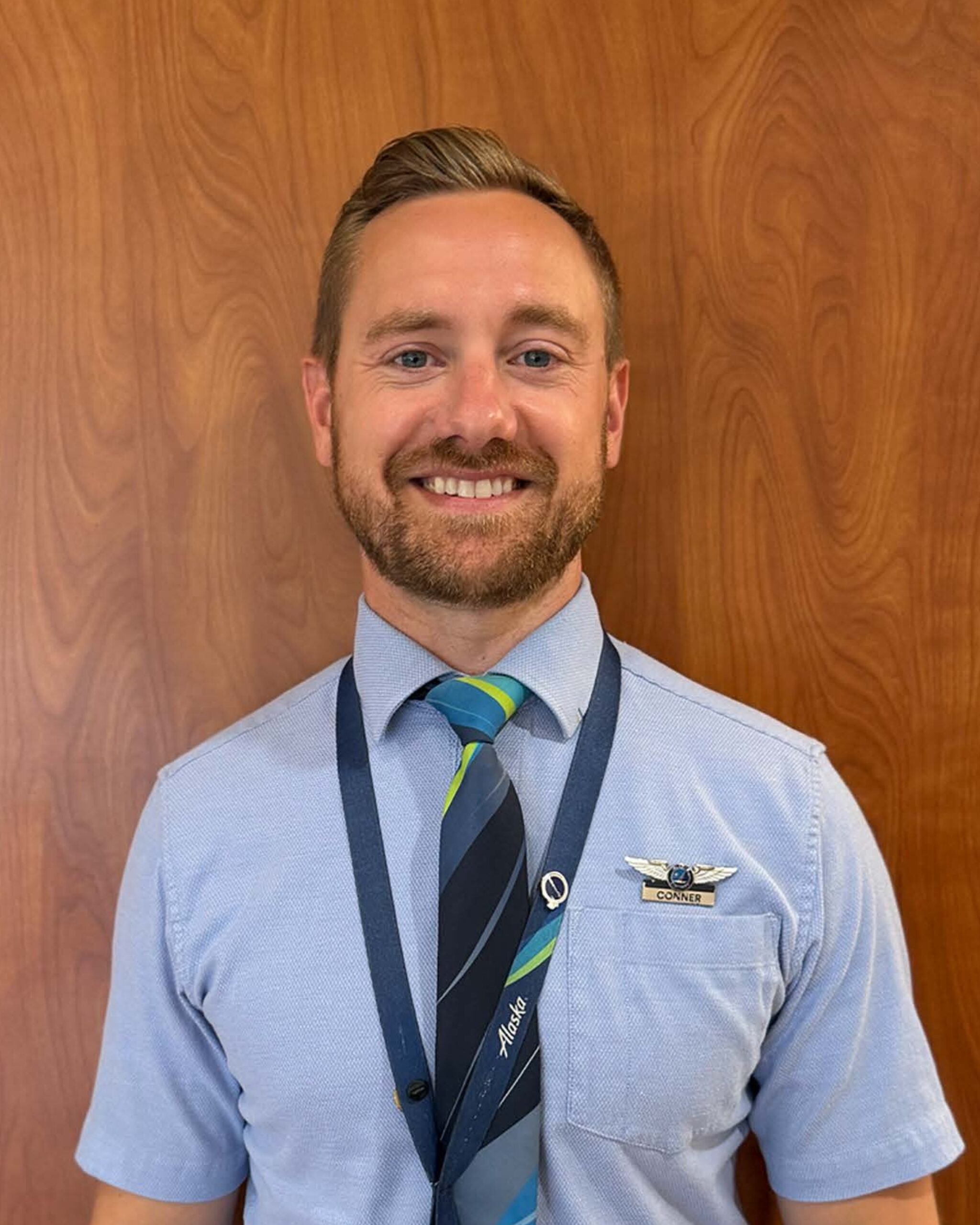
        Conner Gallagher | Local Reserve Chairperson

        Conner began his career as an Alaska Airlines Flight Attendant in 2017 after previously flying for Horizon Air from 2014 to 2017. He holds a Bachelor of Arts degree from Seattle University and has served as SEA Local Reserve Committee Chairperson since 2019.

        Conner became involved with AFA because he wanted to help Flight Attendants better understand and exercise their contractual rights, particularly while navigating the unique challenges of reserve life. He has seen firsthand how knowledgeable advocacy can make a meaningful difference for individual members and believes strongly in holding management accountable to the contract.

        In his continued role with the Reserve Committee, Conner’s priorities are to advocate for greater flexibility and quality of life for reserves, ensure contractual provisions are applied correctly and consistently, and continue identifying opportunities to improve the reserve experience.

        Outside of work and Union advocacy, Conner enjoys skiing, real estate, weightlifting, spending time with his three dogs and family, and going to concerts.

        Ian Haywood | Local Reserve Vice-Chairperson

        Ian started flying in 2017 and has been an AFA volunteer since passing probation. He served as Local Reserve Vice-Chairperson and Mobilization Chairperson from 2022-2024. In these roles, he worked with Flight Attendants understanding the importance of empowerment, and member engagement. He is passionate in ensuring that more reserves feel supported and able to understand their contract, while developing a relationship with AFA that encourages them to become engaged Members.

        He is committed to building a connection between Flight Attendants and Union leadership through education, communication and advocacy. Outside of work and Union activities, he enjoys his travel benefits extensively with his boyfriend and is a cruise traveler, taking five or six cruises a year.

        Rita Tillou | Local Scheduling Chairperson

        Rita has proudly worn the wings of an Alaska Airlines Flight Attendant since 1988. With nearly four decades of dedication to her career and fellow Flight Attendants, she continues to be a passionate advocate for her peers. Rita served as the Local Scheduling Co-Chairperson before transitioning to the Local Scheduling Chairperson, where she remains honored to support our SEA-based Flight Attendants.

        Throughout her career, Rita has devoted more than a decade to representing her fellow Flight Attendants through the Scheduling, Benefits, and Inflight Service committees. Her commitment to fairness and service has been a meaningful part of her Union advocacy and career.

        Family is at the heart of Rita’s life. She has been married to her college sweetheart for 41 years, and together they have two children and two cats. Her passion for aviation is truly a family affair: her husband is also a Flight Attendant, her son is a Pilot, and her daughter-in-law is a Flight Attendant. Outside of flying and AFA, Rita enjoys spending time with family and friends and traveling.

        Dena Heath | Local Uniform Chairperson

        Dena began her career with Alaska Airlines in 2012. Before becoming a Flight Attendant, she spent 16 years in retail management, specializing in visual display and merchandising. She holds a degree in Visual Communications from the Fashion Institute of Design and Merchandising.

        With her passion about uniforms, Dena is excited to continue serving as Local Uniform Chairperson in SEA. She brings her experience, creativity, and attention to detail to the role and looks forward to continuing to support her fellow Flight Attendants.

        Outside of work, Dena loves spending tie with her 5-year-old daughter, Charlie, and making the most of their time together.

        Filed Under: Council 19 SEA (pmAS) Tagged With: ASHSC, Council 19, pmAS, Reserve Committee, Scheduling Committee, SEA, Uniform Committee

        Pre-Merger Alaska Reserve Webinar Video and Q&A Recap – August 6, 2026

        August 12, 2026 13:00

        This message is for pre-merger Alaska Flight Attendants

        Thank you to everyone who joined our first pre-merger Alaska Reserve Webinar! We created this interactive session to share practical contract tips and help you feel more confident about reserve life. You can now watch the recording on our YouTube channel using the link below. Please note that the video is unlisted, so you’ll need this direct link to view it.

        Click here to watch on YouTube ➔

        Save the Date for Our Next Webinar

        Be sure to save the date for our next pre-merger Alaska Reserve Webinar, titled “Is That Legal?” Plan now to join us on Wednesday, October 21, at 1 PM Pacific Time. More information about registration and how to submit questions in advance will be shared at the beginning of September.


        Webinar Q&A

        Updated 08/17/2026

        The following Q&A section from the webinar provides a streamlined overview of the questions asked and responses from our AFA Representative panel. Please refer to the recording for the full details. If you have additional questions or need clarification on anything discussed, please don’t hesitate to contact your Local Reserve Committee.

        1. Is the 118.2 TFP maximum for reserves tied to the standard award of 18 reserve days? Does picking up extra reserve days increase the limit, or does giving away days decrease it?

        Answer: No. The 118.2 TFP monthly maximum is independent of the number of reserve days you are assigned; it is a limit on what you are scheduled to fly. You should track this number via the Reserve Assignment List (RAL), rather than the “bubble” display in Crew Access, which is not an accurate tracker for this specific contract limit. If you are scheduled over the 118.2 limit, you may respectfully decline the trip. If you exceed the limit, you can request that scheduling remove your subsequent reserve days; you won’t be paid for them, but you may pick up lineholder trips.

        2. Can I be tagged for airport standby upon my return to domicile after working an early report transcon, even if my report time was before 4:30 AM Pacific Time?

        Answer: Yes, under specific conditions. Contractually, this refers to 4:29 AM local time of the originating flight. If your flight took off after 4:29 AM local time, you can be tagged for standby upon landing. However, if you are an AM reserve landing back in domicile, scheduling must convert you to ER before assigning airport standby that would end after 12:00 PM.

        3. Is there a flow chart for reserve pay, similar to the commuter policy, to help us navigate these provisions?

        Answer: A single flowchart covering every scenario is unfortunately not possible due to the highly situational nature of our pay structure. However, we are currently reviewing existing tools and resources with the Communications Committee. The goal is to produce updated guides or a video walkthrough to help Flight Attendants navigate Rainmaker and accurately correlate their activity with their paychecks.

        4. I am returning to reserve after a few years away and need a refresher on how things work. Where should I start?

        Answer: First, review Section 11 of the contract, which contains all reserve provisions and includes changes from the current contract. For practical, day-to-day guidance, refer to the Reserve Survival Guide on the inflight website (under Admin/AFA) or your IMD. For bidding-specific questions, consult the Bidding Guide (inflight website under Scheduling > Monthly Bidding). If you still have questions, reach out directly to your Local Reserve Committee Chairperson via the Local Council menu on the AFA Alaska + Hawaiian website.

        5. What are the specific rules regarding Crew Scheduling holding trips in Open Time? Can they hold trips indefinitely to meet operational needs?

        Answer: No, Crew Scheduling cannot hold trips indefinitely. After the self-assignment period (10 AM–2 PM), scheduling can pull trips from Open Time to assign to reserves between 2 PM and 6 PM the day before the trip. If not assigned by 6 PM, the trip must be returned to Open Time. For new vacancies prior to 2 PM the day prior to report, the trip must be visible in Open Time for at least 15 minutes; Crew Scheduling may then withhold it for 15 minutes to determine a like sequence for reassignment or JA. If you believe a trip has been held beyond these parameters, call scheduling to request it; per contract, you may be entitled to the trip on a first-come, first-served basis plus an extra TFP if you fly it.

        6. Regarding Section 11.E.1.e, scheduling often claims they can reassign to “meet the needs of the operation” without citing a specific reason. What are the only four valid reasons for reassignment prior to reporting, and can we decline non-compliant reassignments?

        Answer: Section 11.E.1.e applies to trips prior to reporting. The only four valid reasons for reassignment are: (1) Cancellation, (2) Operational necessity (where no other legal reserves are available), (3) Aircraft downgrade, and (4) A lineholder calling in “well.” These reassignments must be done in inverse seniority order. Once a reserve reports for duty, they can be reassigned at any point, subject to contractual limitations.

        7. If I am an AM reserve called out on a trip, can scheduling tag me for airport standby upon my return to domicile if that standby period extends into the PM hours?

        Answer: AM reserves cannot be assigned airport standby ending after 12 PM. PM reserves cannot be assigned standby ending after 11:59 PM. If scheduling needs you to sit standby past these cut-offs, they must first convert you to ER. This conversion counts as one of your ER days for the month.

        8. What are the current trends in contract violations regarding reserve operations, and have there been any notable improvements?

        Answer:

        • Trends: We are seeing issues with ISA codes preventing self-assignment (manual workaround: call scheduling; they can either remove the code or re-apply the premium); disputes over 3-hour call-out reimbursement; and a grievance filed regarding the company’s refusal to pyramid pay provisions for airport standby and over-duty pay.
        • Improvements: We identified an increase in AM reserves required to sit standby past the last daily flight without being converted to ER. We secured a full audit back to the start of the contract to ensure proper pay. Scheduling is now adding annotations for these situations, and crew pay is conducting weekly audits to prevent misses.

        9. I’m new to reserve and confused about using Rainmaker. How can we implement a process to help new hires know exactly when and what information needs to be entered for pay purposes?

        Answer: Refer to the “Pay and Benefits” section on the inflight website. Generally, you should only submit a pay query for out-of-order assignment or being contacted outside your contactability period. All other provisions should ideally be automated in Crew Access or caught by weekly crew pay audits. The Committee is actively advocating for increased accuracy and accountability in these automated systems.

        10. Can Crew Scheduling deny a request to be released from a deadhead (DHD) on the last leg of a sequence?

        Answer: There is a distinction between the two contract provisions. Section 10.X.6 allows reserve Flight Attendants to deadhead home early if the duty period contains no other flying, but the Flight Attendant remains contactable and assignable during their reserve availability period (RAP) upon arrival. Section 10.X.3 allows Flight Attendants to be released from the deadhead entirely with pay, provided no other scheduling obligation exists. If you are specifically asking about being fully released as a reserve, this is a complex issue currently being reviewed by the Negotiating Committee to clarify intent.

        11. What are the duty day limitations before I can refuse an assignment?

        Answer: Rules differ by where you are. At a domicile/co-terminal, you cannot be required to depart on a flight scheduled to land more than 14 hours from the start of your duty period. At an outstation, you may be required to exceed 14 hours only to complete scheduled flying. If you feel you cannot safely operate, the Fatigue Risk Management Plan (FRMP)—found in Letter of Agreement #6 at the end of the contract—provides the procedure for calling out fatigue.

        12. What are the best tips for bidding while on reserve?

        Answer: The PBS Subcommittee has published comprehensive documentation on the Inflight website under Scheduling & Bidding > Monthly Bidding > PBS Help. For specific, individual situations (such as commuting needs), email the PBS Subcommittee directly at pbs.qa@alaskaair.com. They are highly knowledgeable and responsive to specific bidding inquiries.

        13. Is it legal for AM reserves to be tagged for a redeye after already working a trip?

        Answer: Yes, it can be legal, even if it is exhausting. You can be assigned a trip late in your AM reserve availability period and subsequently tagged for additional flying, such as a redeye. If you reach your limit and can no longer operate safely, you may elect to utilize the Fatigue Risk Management Plan (FRMP).

        14. When am I required to be at base if I’ve been released from contactability?

        Answer: If you’ve been released from contactability, you are not required to be at your base until the report time of your actual assignment. However, if you are a registered air commuter and wish to be protected under the air commuter policy, your second flight must be scheduled to land at least 30 minutes prior to your report time. Refer to Section 36 for details on commuter policies and recovery options.

        15. Can I preemptively call out sick for a single reserve day during a block to attend an appointment?

        Answer: Yes. You should call scheduling the day before your block starts to inform them that you will be unavailable for a specific date due to an appointment. They will adjust your schedule accordingly.

        16. Am I required to answer Crew Scheduling calls while on a layover?

        Answer: No. While on a layover, you are not contractually required to answer calls from Crew Scheduling. However, if you do answer, you are required to accept any reassignment they provide. You are back on duty 45 minutes prior to departure (D -45), at which point you must acknowledge and return any calls.

        17. Why do some days show as “closed” in the ARC even before Open Time?

        Answer: The ARC is a live document affected by many variables, including late medical leaves, resignations, terminations, or incorrect initial calculations by management. Additionally, Flight Attendant-to-Flight Attendant trading can inadvertently lower availability if the trade results in a Flight Attendant being left with only a single reserve day, which does not count toward the ARC minimums. This is an area where the Committee is pushing for more transparency and flexibility.

        18. Why are “Release from Contactability” forms often not approved?

        Answer: The Committee has noticed that approval rates for these requests are lower than expected. We have requested data from management to understand the rationale behind these denials. Once the data is analyzed, the Committee intends to discuss potential improvements to ensure this contractual provision is being utilized as intended.

        19. How do I know if I was tagged after my debrief?

        Answer: Per Section 11.D.6, reserves must make positive contact with scheduling within 15 minutes following the conclusion of the 15-minute debrief period (a total of 30 minutes after block-in). Note that Block2Block messaging alone is not considered “positive contact”—if you receive a message, you must call scheduling to confirm.

        20. Do I get extra pay if I am reassigned after self-assigning a trip?

        Answer: Generally, no. Being reassigned is a standard aspect of reserve life. Unless other specific provisions are triggered, standard reassignments after check-in are legal and do not automatically result in extra pay. If you believe your specific situation warrants extra pay, contact your Local Reserve Committee Chairperson for a review.

        Filed Under: AFA News Now, Reserve Committee Tagged With: pmAS

        • « Previous Page
        • 1
        • 2
        • 3
        • 4
        • …
        • 18
        • Next Page »

        Need Help?

        Have an issue or concern to report to AFA?  Click here to access the AFA Alaska online support center.

        Latest News

        • Council 47 LAX Base Update – LAX Membership Meeting – Don’t Forget
        • From Concept to Cabin: Putting Management’s Inflight Service Ideas Under the Microscope
        • Air Safety, Health and Security: Be Prepared For A Fume Event
        • AFA News in Review – November 13, 2026
        • Go In-Depth with Our AFA Inflight Service Committee Chairpersons
        • Council 47 Officer Update – ETCH Segment Trading and Pairing Reconstruction
        • 2027 Health Benefits Open Enrollment
        • Council 47 Officer Update – November 2026
        • Council 43 Update – December 2026 Bid Period
        • AFA Alaska + Hawaiian MEC Congratulates Pilots on Tentative Agreement

        From Concept to Cabin: Putting Management’s Inflight Service Ideas Under the Microscope

        November 16, 2026

        Welcome to Week 3 of our Inflight Service Committee Focus Month! Every day, we show up to create a warm, welcoming experience for our passengers while keeping safety as our top priority. High-quality service isn’t just part of the job; it’s a big part of who we are as Flight Attendants. But for service to […]

        Go In-Depth with Our AFA Inflight Service Committee Chairpersons

        November 13, 2026

        Whether you’re pushing a fully loaded cart down the aisle, organizing a packed galley, or delivering an overly complicated service on an extra-busy flight, every Flight Attendant has had that moment: glancing at the published service in the OSH and wondering, “Did anyone actually test this?” To shed light on what really happens behind the scenes, […]

        AFA Alaska + Hawaiian MEC Congratulates Pilots on Tentative Agreement

        November 11, 2026

        Yesterday, the Air Line Pilots Association (ALPA) announced that pilots at Alaska and Hawaiian Airlines have reached a Tentative Agreement (TA) for a new Joint Collective Bargaining Agreement (JCBA). On behalf of the AFA Alaska + Hawaiian Master Executive Council, we extend our congratulations to our flight deck colleagues and their negotiating committee on reaching […]

        Inside Our Inflight Service Committee Meetings With Management

        November 9, 2026

        Welcome to Week 2 of our Inflight Service Committee Focus Month! As aviation safety professionals and first responders, our primary focus in the cabin is always the safety and well-being of our passengers. At the same time, the care and hospitality we provide on every trip represent a core part of our professional identity. To […]

        Hotel Committee Meeting Recap – November 2026

        November 9, 2026

        On Monday, November 2, our AFA Hotel Committee Chairpersons met in-person to receive an update on current layover hotels and transportation providers and discuss concerns with management. Representing you at the meeting were Dori Marron (ANC), Brian Sherill (pmAS LAX), Le’a Tupola (pmHA LAX/SEA), Kelly Hepworth (PDX), Kanani Vallot (SAN), Hilary Streem (SFO), with MEC […]

        Recent Posts

        • Council 47 LAX Base Update – LAX Membership Meeting – Don’t Forget
        • From Concept to Cabin: Putting Management’s Inflight Service Ideas Under the Microscope
        • Air Safety, Health and Security: Be Prepared For A Fume Event
        • AFA News in Review – November 13, 2026
        • Go In-Depth with Our AFA Inflight Service Committee Chairpersons
        • Council 47 Officer Update – ETCH Segment Trading and Pairing Reconstruction
        • 2027 Health Benefits Open Enrollment
        • Council 47 Officer Update – November 2026
        • Council 43 Update – December 2026 Bid Period
        • AFA Alaska + Hawaiian MEC Congratulates Pilots on Tentative Agreement
        • Inside Our Inflight Service Committee Meetings With Management
        • Hotel Committee Meeting Recap – November 2026
        • 787-10 New Aircraft Negotiations
        • AFA News in Review – November 6, 2026
        • MEC Retirement Committee Chairperson Interviews – December 2026

        Local Councils

        • Anchorage
        • Honolulu
        • Los Angeles (pre-merger Alaska)
        • Los Angeles/Seattle (pre-merger Hawaiian)
        • Portland
        • San Diego
        • San Francisco
        • Seattle (pre-merger Alaska)

        Master Executive Council

        • MEC

        Contract

        • Contract Home

        Committees

        • Air Safety, Health, & Security
        • Benefits
        • Communications
        • EAP/Professional Standards
        • Government Affairs
        • Grievance
        • Hotel
        • Human Rights
        • Inflight Service
        • Membership Engagement
        • Reserve
        • Retirement
        • Scheduling
        • Uniform

        News By Month

        News By Category

        AFA News Now Air Quality Air Safety, Health, & Security Committee (ASHSC) Alternative Dispute Resolution (ADR) AS/HA Merger AS/VX Merger Benefits Committee Committees Communications Committee Contract Contract 2014 Negotiations Blog Council 15 SAN Council 18 LAX (pmAS) Council 19 SEA (pmAS) Council 30 ANC Council 35 SFO Council 39 PDX Council 43 HNL Council 47 LAX/SEA (pmHA) EAP/Professional Standards Committee Extension 2021 Blog Featured Government Affairs Committee Grievance Committee Hotel Committee Human Rights & Equity Committee Industry News Inflight Service Committee Inflight Training Committee JNC Blog Joint Negotiating Committee (JNC) Latest News Local Councils Master Executive Council (MEC) Membership Engagement Committee Message from the MEC President Mobilization Committee Negotiations Pairing Construction Preferential Bidding System (PBS) Press Releases Reserve Committee Retirement Committee Scheduling Committee Uniform Committee
        • Email
        • Facebook
        • Instagram
        • YouTube

        Want To Stay In The Loop?

        Stay up-to-date on AFA Alaska + Hawaiian news and information by signing up for our email and text message updates. Click a button below to get started or update your preferences if you're already a subscriber.
        Sign Up for Emails
        Sign Up for Text Updates

        Connect With AFA

        • Contact Us
        • Online Support Center
        • AFA International
        • CWA
        • AFA Alaska + Hawaiian Social Media Guidelines
        • AFA-CWA Mutual Respect Policy

        Copyright © 2013-2026 Alaska/Hawaiian Airlines Master Executive Council, Association of Flight Attendants-CWA, AFL-CIO